Cerma w/STM-3
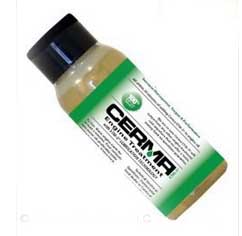 updated
6-23-2016
updated
6-23-2016
Advanced Lubrication Technology
for maximum mileage
and vehicle longevity.
This page is designed to give you a good overview of Cerma products
and how they
can greatly extend the life of the engines and moving
components of your vehicles and power equipment you use. Cerma
can save you money, a lot of money over time. Using Cerma can more
than double the useful
life of engines, transmissions, differentials, etc.
This page will tell you things you won't find on either my affiliate
intro
page or the main
Cerma store site where you can purchase products.
If you will go over this page
first, it will save you a lot of time
in
determining what Cerma does, why you would want to use it, and
what specific
Cerma products are for you.
After studying this page, next go to https://cermastore.com/bb,
my affiliate intro page for a general overview of everything that
is offered which then links you into the main cermastore site.
Affiliate
info How to use Cerma Dosages
Fuel treatment
More info FAQ
Cerma products double and triple the life of engines,
transmissions,
differentials, power steering pumps, air conditioning and even hydraulic
systems. This is very high tech stuff. Emissions
disappear, mileage increases,
engine gets quiet; it is not teflon based. Makes
your diesel quit smoking. I have
used cerma products in all my engines; car, truck, jeep, diesel pickup,
lawn mowers, rototillers, and chainsaws for the past 5
years. The stuff works.
Now there are different formulations available and honed in for specific
components in your vehicle such as your air conditioning system that
are even more effective than using just the engine additive for these areas.
Cerma is an engine, transmission, differential, air conditioning system,
and
power steering pump protection
system using additives putting up to
a 6 micron coating of ceramic protection on all wearing metal surfaces.
The benefit is to extend the life of your vehicles/motorized power
equipment
(chain saws, lawn mowers, rototillers, vacuums and blowers, weed eaters,
motorcycles, boat motors, snow mobiles, etc.) two to three times over what
you would normally get out of them.
What can it do?
Most of you are driving around in $10k to $50k
cars/SUVs and pickups -
much more by the time you get done paying interest on your loans. Doesn't
it make sense
to spend a couple hundred dollars to protect that investment,
increase the useful life
of the whole vehicle by several times, and stay out
of expensive repair shops? Using
Cerma-cermax products in your vehicle
to protect all the vital wear areas can do just that. Cerma products are
very
cost effective compared to the consequences of not using them. Once Cerma
w/STM-3 is added to the engine, that engine will continually clean itself. It
is
a one time treatment that stops deposit formation inside your engine.
Using
Cermax engine oil after initial STM-3 treatment can extend that protection
and
yield up to 30,000
miles between oil changes (change oil filter more often
though). That can save you a lot of money.
This company has come a long ways since I first
started with them many
years ago. Back then it was just an additive for car engines. Now there is
a
protection product for engines (gas and/or diesel), transmissions (automatics
or manual
shift), differentials, power steering pumps, and even your air
conditioning system.
EVO oil is available for newer cars with a 0w viscosity
rating and 7500 miles
between oil changes which greatly enhances mileage
because of it's lack of friction properties. Cermax oil (different than the EVO
oil)
is good for up to
30,000miles between oil changes as it contains STM-3
to maximize protection.
Cerma w/STM-3 for Gasoline and Diesel Engines utilizes ceramic technology
to form a micro-ceramic seal on all metal parts within your engine. This will
not
allow the formation of performance
degrading sludge and abrasive carbons.
Cerma w/STM-3 for Gasoline/Diesel Engines will
restore lost power to your car
or pickup's gas engine, while giving you
protection unmatched by any other oil
or oil additive sold anywhere including Amsoil! This is NOT Slick 50
teflon
technology! Cerma seals and protects metal for superior lubrication of hot parts.
Cerma treated oil can maintain adhesion to hot metal in excess of 1900º F.
Normal oil
avoids metal at 275º and will oxidize at 375-425º. Cerma
seals and
protects metal for superior lubrication of hot parts. The hard ceramic finish will
expand and contract
without separating from the metal which
ensures protection
in both hot and cold
conditions. CERMA is extremely strong and can withstand
pressures in excess of 350,000 PSI. That
is over 20 times the protection of any
other oil,
additive, or synthetic oil.
I will tell you more further down but let's give
you some clues about what to look
for on the Cerma website as it is no longer a simple site to go through
and
contains a lot of useful information, documents, testimonies, and videos
to
explore besides just being a place to order product.
I am a Cerma affiliate. It costs nothing to become a Cerma affiliate; no
monthlies,
no annual membership, no autoships. My affiliate intro page at https://cermastore.com/bb
is an introductory overview of the Cerma site and will lead you into that
main site. I
receive a rebate commission on all cerma products I purchase through my
affiliate
site for myself and a commission on all products ordered through my affiliate
site
and even a small commission on products ordered through affiliate sites
that signed
up under me. Cerma isn't cheap product. It is very much needed and is in high
demand.
Affiliate income can become quite substantial over time. To become an affiliate
click
on the "DEALER" heading at the top of the page on the cerma store site
you are
linked to from my intro page at https://cermastore.com/bb
Then click on "BECOME
AN AFFILIATE".
Cerma's main workhorse is the Cerma STM-3 engine additive. It is the
first thing
you add to an engine, preferably with existing oil in the engine that still has
a good
1500 miles left to go before the next oil change. This treatment is only done
once.
For gas engines it comes in a 2 oz bottle. Since diesel engines, like in pickups
and
Suburbans, usually have 11 - 12 quart capacities, 6 oz is necessary for a
diesel pickup
engine. The Cerma w/STM-3 for diesels can be used in gasoline car engines,
motorcycles,
lawnmowers, rototiller engines etc too. But Cerma w/STM-3 for gasoline
powered
engines CANNOT be used in diesels. This applies to both the Cerma
STM-3
treatment as well as the Cerma oils. There is a different oil base used in
Cerma
for gasoline engines that is not suitable for diesel engines. So let's say you
need
to treat a couple gas car engines (2 oz ea), a motorcycle (1oz), a lawn
mower
(1/2 oz), etc. it would be more cost effective to buy a 6oz Cerma w/STM-3
for
diesel than it would be to buy three 2 oz Cermas for gas engines.
After you have run the Cerma w/STM-3
engine additive for 1500 miles or better; do
an oil change and then switch to Cermax oil. You no longer need to use the
engine
treatment. That's a one time shot. Just use Cerma or Cermax oil in the engine
from
then on. Cermax oil has more STM-3 in it than Cerma oil hence you can go up to
30,000
miles before changing oil using Cermax as opposed to only 15,000 miles
using
Cerma oil. By the quart it is expensive; you don't want to buy it that way. Buy
it 20 qts
or 5 gallons at a whack. If you do that, Cermax oil with the additional STM-3
and double
the mileage between oil changes, costs the same as the Cerma oil. 5 gallons of
either
is $152 so why would you settle for lesser protection for the same dollar?
That's cheaper
than Amsoil and you are getting much much better engine protection. If your car uses
10W-30 you can use the same oil you buy for your car in your lawn mower, small
engines, and motorcycles also.
My diesel pickup uses 15w-40. Remember diesel oil (as well as diesel engine
additive)
can be also used in cars and gasoline engines (but you can't use motor oil or
engine
additive for gasoline engines in a diesel). I bought 5 gallons (20 one quart
bottles) of
15w-40 Cermax oil for diesels and use the same oil in my motorcycle, lawn mower,
rototiller,
and log splitter engines. And I don't go 30,000 miles on it. I change the oil
filter on it
every 3000 miles and will run it until the oil is a dark honey color,
before almost black.
As long as it's still dark honey colored, it's still good oil. This means you will
have to
add some oil every time you change the oil filter, especially at first until the STM-3
treatment has cleaned up the inside of your engine. Then you can monitor the oil
color on the
dipstick and extend the time periods between filter changes accordingly.
The next priorities after treating the
engine with the STM-3 additive and then getting
the right oil in the engine at the 1500 - 3000 mile oil/filter change point after the
engine
treatment was added should be the additives for:
...automatic or manual shift transmission
...rear end and front 4 x 4 differentials
...the power steering pump
...grease with STM-3 for the U joints if your U joints are greaseable; many
aren't
...the air conditioning system additive, which with their tool you can purchase,
you can
add yourself. Only takes 10 ml and will greatly enhance the
performance and longevity
of your air conditioning pump and system components, with resulting
cooler air.
...fuel additive for either gas or diesel to clean up your fuel system; a pint
should last
you a year depending upon how many miles you drive a year.
...they even have 2 cycle oil for your chain saw and weed eaters, bar oil for
your chain
saw and special oil
to lengthen the life/prevent rusting due to water in the air of your
air powered tools.
At my affiliate page, https://cermastore.com/bb,
you will find 13 blocks of information giving a brief overview of each of
the
main areas the Cerma products cover. If you don't review this page first, the
main
Cermastore site can become quite overwhelming with the quantity of
information
that is available there to absorb. Get the overview first on the affiliate page so you
know
what to hunt for and how to properly categorize items on the main site.
At https://cermastore.com/bb click on any white lettered link in the two black
boxes at the top of the
affiliate page and it will take you into the main cermastore
site. First time around that would
probably be CERMASTORE. On return visits
click on TREATMENTS, MOTOR OIL, or other headings that will take you directly
to those areas of the site.
Value packages combine more than one item and offer you a discount for
choosing
a multiple item package such as 5 qts of oil, a Cerma w/STM-3 treatment, and
an
automatic transmission treatment. But remember what I said about buying oil;
buy
in 20 quart lots and Cermax with the most STM-3 in it and good for 30,000
miles
between oil changes, is the same price as Cerma oil good for only 15,000 miles.
That's not true if you only buy one or five quarts.
At the top of the main cermastore page is seven different menu categories;
company, technology, documents, videos, dealer related info, Blogs/news,
and shop now. Each of these categories breaks down into multiple information
resources. Be sure and spend time with the videos section; some pretty amazing
demonstrations there regarding what these products do for you.
The right hand side of the cermastore page has Shop
by Categories, which
narrows down the specific items you are seeking. Price List - all categories
gives
you prices on everything offered on one single long page.
When you are ready to start assembling an order click on SHOP NOW and
start
filling your shopping cart with a wish list. Delete items, change quantities
until you've
got what you need and want at a price you feel you can afford. They do give
you
a discount for larger orders that shows up at checkout.
Dosages
Go to https://cermastore.com/bb
, select the top white letters inside the black
box which says "For more information or to purchase online - click
here..."
This takes you into the main cerma website. Then select "The
Technology" from
the top menu. Then select "Application installation specifications"
from that menu.
Scroll down until you find "Dosage Instructions", click on that to
expand the pic
you see into a readable page. If you don't get a readable page size scroll
down
further and click on "Having trouble viewing? - click here" and you
will get a big
page to look at that is easy to read.
Basically add the Cerma Oil treatment to the
engine per the above page
instructions and drive it 1500-3000 miles, change the oil to Cermax oil
and
change the filter. You do not have to add any more Cerma w/STM-3
engine additive. Although Cermax oil is good for up to 30,000 miles; until
the engine is really clean, change the filter whenever the oil on the dipstick
gets darker than a dark honey color. Fully black oil means your filter
needs
changing and you've got dirty oil circulating around your engine. This may
be every 500 to a thousand miles to start with until your engine gets
cleaned
up. The oil doesn't go bad, but as your engine gives up its residues; the
filter
is where they get trapped. Have extra Cermax oil on hand to make up for
that
lost during these filter changes. That's why you buy Cermax oil (30,000
miles)
instead of Cerma oil (15,000 miles) in 20 quart quantities - both cost the
same
in 20 quart quantities ($7.60/qt or less with your affiliate rebate) but you
get
much more STM-3 protection in the Cermax oil than you do the Cerma oil.
It's
a no brainer on which oil to use if you'll buy it in 20 quart quantities.
Everything is covered on the doseage instructions page except small
engines.
For small engines like Honda, Briggs and Stratton, and Tecumseh 4 cycle
lawn mowers, weed eaters, rototillers, log splitters, electrical generators, etc
where the oil reservoir capacities are around 1 liter of oil; use 1/2 oz,
that's about 15ml of
Cerma w/STM-3, per liter of oil in the engine reservoir.
Run that engine from 6 to 12
hours with the Cerma w/STM-3 treatment in it
before changing the oil. Then change the oil to Cermax w/STM-3 oil and watch
the color of the oil on the dipstick to tell
you when to change oil again. When it
passes the dark honey into a near black color;
it is time to change it. The Cerma
w/STM-3 treatment will unseat and reseat
the rings in the engine as your engine
undergoes cleansing and the up to 6
micron coating is plated onto the wear surfaces.
Your engine may smoke somewhat while this cleansing and reseating/replating
process occurs depending upon
its age. Don't change oil until the smoking stops
and the cleansing/reseating process has completed. The oil change to Cermax
w/STM-3 oil at the 6 to 12 hour point should
then last a long time.
For 2 cycle engines such as chainsaws and weedeaters, use the Cerma 2
cycle
oil at the 40-1 ratio you normally would to start with. I use a 40-1 in my chain
saws;
that's 3.2 oz or 95 ml of the Cerma 2 cycle oil mixed with 1 gallon of gasoline.
As your engine gets cleaned up and the metal surfaces coated with the
STM-3
technology, you can reduce the oil used to a 50-1 or even higher mixture.
Cerma just came out with a bar chain oil
for chainsaws. It's so new they don't
even have a part number for it yet, but I have a gallon coming at a very
reasonable
price. In the video section on the Cerma page, there is a video of using
this bar
chain oil. The guy cuts through a thick log with a dull chain and then
holds the saw
by the bar between his two bare hands. Normally that bar and chain would be
so
hot it would leave a bar S imprint in your hands if you tried to do that.
Cerma Fuel Treatment for gasoline
or diesel engines
You must choose whether the use will be for diesel or gasoline.
They are not interchangeable. You use gasoline treatment in gasoline
engines
and you use diesel fuel treatment in diesel engines.
Cleaning Action, Lubrication, Anti-Gelling, Efficiency, Water Control
To watch the Cerma Fuel Treatment video, click the Video tab when you
get into the cermastore site. It tells quite a story.
Cerma STM-3 Fuel Treatment lubricates and protects the upper engine,
prevents costly downtime, restores performance, cleans the fuel tank,
cleans
injectors, cleans fuel lines and provides unmatched protection.
Cerma STM-3 Fuel Treatment is a continuous use treatment. Because fuel
(gasoline, diesel) encapsulates the lubrication inside the fuel molecules
within the hydrocarbon matrix, when the injectors spray the fuel into the
system the lubrication burns off along with the fuel. Cerma STM-3 releases
the lubrication trapped inside the fuel, and allows the fuel system to
properly
lubricate.
In addition, Cerma STM-3 Fuel Treatment adds a "SiC" (silicone
carbide)
component to the system which lubricates the upper engine, cleans the
fuel system, removes water and moisture, conditions the fuel pump, cleans
the fuel injectors and fuel tank, and acts as an octane booster.
For maximum fuel savings and protection, use the fuel treatment with
Cerma STM-3 Engine Treatment.
Simple application for the fuel treatment , just add it to the fuel tank.
Ratio: 1oz for up to first 40 gallons and 1oz for each additional 40 gallons.
1st Fill Up: Prior to Fill up, have at least a HALF EMPTY TANK (so you
get
a good mixing of the additive to the fuel) , add treatment into the fuel
tank
at the recommended ratio of 1 oz per 40 gallons.
Fill tank with fuel.
2nd Fill Up: Repeat, not too hard to remember.
The trick is to know how much fuel you will be adding so you put the right
amount of additive in at the beginning of fill up. I know where my gas gauge
reads to be able to add 20 gallons of fuel, which make this quite simple.
The bottles come marked so it is easy to put the right amount in. Just
make
sure you add it BEFORE refueling so it gets mixed up good during refueling.
Available Sizes:
2 oz Introductory Dose: 1oz Each for next 2 fill ups
16 oz "Measure/Pour" Bottle: Over 1 Year Supply for Auto or Small
Diesel
1 Quart Bottle: 32 ounces for bulk savings
1 Gallon Jug: 4 Quarts (128 ounces) for Large Diesel, Over 1 Year Supply
5 Gallon Pail: 5 Gallons (20 Quarts) for Large Diesel or Fleet Applications
$2 worth will treat 20 gallons of fuel.
Here's a simple plan if you want
longest life from your equipment/vehicles
Cerma STM-3 engine treatment then Cerma or Cermax (better) STM-3
motor oil
Cerma STM-3 automatic transmission treatment then Cerma STM-3 automatic
transmission fluid
Cerma STM-3 manual transmission treatment then Cerma STM-3 gear oil
Cerma STM-3 differential treatment then Cerma STM-3 gear oil
Cerma STM-3 power steering treatment then Cerma STM-3 power steering
fluid
Cerma STM-3 hydraulic treatment then Cerma STM-3 hydraulic fluid for
hydraulic systems
Cerma STM-3 air conditioning system treatment - only 10ml - do it yourself - one
time shot
Cerma fuel additive - 1 oz per 40 gallons of fuel keeps your system clean

More
info
A more in depth explanation of just what Cerma is.
CerMa
Products utilize a ceramic Lubrication Catalyst STM-3 which is designed to
be used on any rigid or semi rigid surface experiencing sliding, rotating or
oscillating
harmonic friction. Cerma
is designed to carry loads in excess of
350,000 PSI as well
as lubricate at temperatures in excess of 1900 F.
Cerma is a combination of a unique water based ceramic resin and lubricating
solid including a ceramic lubricating mole.
Cerma combines the durability
of a
ceramic resin with the lubricity of the ceramic lubricant.
Cerma works well in
all
applications, but performs best where high temperatures,
high loads and
high speeds are experienced. Cerma is fully capable
of carrying the load where
normal lubricants and PTFE (teflon) additives fail.
Cerma
is 100 % solids, clear in color and acquires a glass finish in use. Cerma
is formulated to provide an approximate cured film thickness of 2 -
6 microns
of ceramic coating. Cerma is a material that contains no solvents.
COATING
PROTECTION ABOVE 1900°F
Normal
oils avoid hot metals at approximately 275°F and will oxidize (break down)
at approximately 375 to 425°F. Cerma
treated oil maintains adhesion at base metal
temperatures in excess of 1900°F. It seals
and protects metal with a 2 - 6 micron
ceramic
coating - treated oil is now attracted to the hot metals.
This feature allows
for proper lubrication of hot parts.
DURABLE
& SEMI-RIGID
Creates a hard ceramic
finish that survives impact, as well as expansion and
contraction without separating from the base metal / plastic - this ensures proper
protection whether cold or hot.
HIGH
LOAD CAPABILITY PROTECTION
Cerma
lubricating pigments are capable of carrying loads in excess of 350,000 PSI.
That’s
over 20
times the protection of any oil or additive, including synthetic oils.
CORROSION
& CHEMICAL PROTECTION
Cerma is resistant to
most chemicals and acids while inhibiting oxidation.
Cermax products will seal all metal
parts with a ceramic coating that will stop
the
formation of destructive abrasive carbon moles, also removes deposits
that are
already formed. By doing this Cerma products can stop the wear of
the components within your engine
and transmission.
CONSTANT
OILING SYSTEMS
(Engines)
Cerma will reduce the formation of carbon deposits as well as stopping
destructive HARMONICS.
Every
moving assembly produces Harmonics.
Like
a tuning fork the rotating assembly within your engine will produce
harmonics
that will rob you of power by causing imbalances within the moving
parts. Harmonics will lead to the destruction of bearings within your engine.
Engine harmonics will cause the bearings within your water pump, alternator,
a/c, belt rider pulleys, to fail faster than they should.
Cerma products put a
stop to
internal engine harmonic generation - this feature alone will save
you in
future repair needs, saving benefits by way of reclaimed horsepower,
and lower fuel demand requirements.
Cerma
is a unique system that will form a
protective layer of ceramic within
any lubrication system requiring constant
flow or wetting to protect the parts
from wear and oxidation from the elements.
Cerma products are non-flammable
with no V.O.C.s (volatile organic
compounds). Cerma is compatible
with today's
emphasis on environmentally
friendly products. Cerma may be
used on all
unpainted surfaces. Cerma
has just finished 5 years of real world testing.
Cerma products have been tested and validated by an EPA
certified lab.
In
gasoline and diesel engines, Cerma has
shown an unprecedented
reduction in emission gases, increased fuel economy, horse power increase,
reduction of carbon
deposits, the elimination of vibration caused by internal
harmonics . Cerma products have been validated by third party labs, on
metallurgy, emission reduction, friction reduction, oil sampling, chemical
reaction and stability, harmonic reduction, rust reduction and carbon deposit
reduction!
Third party testing has shown the use of Cerma for Gasoline Engines can
reduce emissions by as much as 92%, friction
by as much as 80% and
harmonics by as much as 98%.
All Cerma products are environmentally safe
and do not contain any
solvents or teflon products.
Products are made for :
2 cycle engines
4 cycle gasoline engines
Diesel pickup and diesel car engines
Semi diesel engines
differentials and transmissions
power steering pumps
air conditioning systems - car and household
FAQ
frequently asked questions
What is Cerma?
Cerma is a ceramic catalyst that is embedded 2 - 6 microns into the
sub-surface of the metal surfaces of an engine and drivetrain.
How does Cerma work?
Ceramic seals and protects metal for superior
lubrication of hot parts.
Cerma treated oil can maintain adhesion to hot metal in excess of 1900º
F.
Normal oil avoids metal at 275º and will oxidize at 375-425º.
The hard ceramic finish will expand and contract without separating from
the metal which ensures protection in both hot and cold conditions.
Cerma is extremely strong and can withstand pressures in excess of
350,000 PSI. That is over 20 times the protection of any oil,
additive
or synthetic oil. Cerma's advanced and entrenched properties provide
for enhanced lubrication which allows the engine to run smoothly
and
cleanly, as well as providing for increased power.
Moreover, the micro-embedded Cerma properties can be maintained
not only at high temperatures but also exist on the engine parts
after
the engine stops running.
This effect is in
stark contrast to the inadequate
filming of motor oil which results in a condition referred to as
"dry-start".
Because motor oil drains off the engine parts when the engine is
not
running, an inadequate layer of lubricant causes engine parts
considerable
wear each time the engine is started.
Can Cerma increase engine horsepower?
Yes! To compare horsepower of an engine with Cerma, versus the
same engine without Cerma, we have conducted numerous
tests these
past 5 years, including, for example, a test on a 1998 JEEP Grand
Cherokee
Laredo 4.0 liter 6-cylinder engine. The engine was measured using a
Dynajet
Model 248C Dynamometer.
The test showed an average increase of 8.4
horsepower when Cerma was added to
the oil.
Can Cerma increase engine compression and
fuel economy?
A road test on a truck with a Diesel CAT
430hp engine was conducted
by the Canadian Hydrogen Energy Company Ltd. The
road test simulated
normal highway driving conditions experienced by most
truck drivers
across the United States and Canada. This "real world"
test enabled
accurate recording of a number of factors including; fuel
consumption,
mileage, weight, weather conditions, and tire pressure.
The use of Cerma provided excellent results in fuel economy. Within
100 miles
of adding Cerma, fuel economy increased by 16.15%. This
result showed that Cerma had an immediate positive effect on the
combustion chamber by
increasing compression in the engine and
increasing the efficiency of the fuel
ignition system.
The best results for a diesel engine do not occur until there is at least
500
to 1000 miles of Cerma use in the crankcase.
As for gasoline engines, various tests have been conducted that have
generated
a wide range of results from 3.81% to 21% increase in fuel
economy. The car's
make and model, as well as driving conditions and
driver's habits, have caused
the increase in fuel economy to vary.
Why is the reduction of emission gases
important?
In populated regions of the U.S. and the world,
gas and diesel powered
vehicles are major contributors of pollution as
millions of vehicle on the
road add up. Pollution comes from by-products of
the combustion process
(exhaust) and from the evaporation of the fuel itself.
Gasoline and diesel fuels are mixtures of hydrocarbons: compounds which
contain both hydrogen and carbon atoms. In a "perfect engine",
oxygen in the
air would convert ALL the hydrogen in the fuel to water and ALL
the carbon
in the fuel to carbon dioxide. Nitrogen in the air would remain
unaffected.
Unfortunately, the combustion process has not been "perfect" and gas
and diesel engines emit several types of pollutants.
• HYDROCARBON (HC): Hydrocarbon emissions result when fuel
molecules do not
burn or only partially burn. Hydrocarbons react to nitrogen
oxide and sunlight
to create ground-level ozone, a major component of smog.
Smog can irritate the
eyes, damage the lungs, and aggravate respiratory
problems. It is our most
widespread and intractable urban pollution problem.
A number of hydrocarbons
are also toxic with potential to cause cancer.
• NITROGEN OXIDE (NOx): Under the high pressure
and temperature
conditions in the engine, nitrogen and oxygen atoms in the air
react to form
various nitrogen oxides. Nitrogen oxide, like hydrocarbons, is a
precursor to
the formation of ozone.
• CARBON MONOXIDE (CO): Carbon monoxide is a product of incomplete
combustion and occurs when carbon in the fuel is partially oxidized rather
than
fully oxidized to carbon dioxide (CO2). In humans, carbon monoxide
reduces
the flow of oxygen in the bloodstream and is dangerous to persons with
heart
disease.
Until Cerma, these emission problems have attempted to be solved by
mechanical changes to the internal combustion engine. Catalytic converters
and
sophisticated emission control systems, as well as tighter tailpipe emissions
standards, have improved the control of emissions, but the increase in travel
miles has offset much of the emission control progress.
In tests, conducted by an independent laboratory, approved by the EPA
and
California Air Resources Board (CARB), exhaust concentrations of
hydrocarbons,
(HC), carbon monoxide (CO2), and Nitrogen oxide (NOx)
were measured. The
following vehicle engines were tested before and
after Cerma were poured in
the engines. 5 quarts of Pennzoil 10/30
were used.
Vehicle 1:
1996 GMC Yukon, Mileage 133,321 (214559 km)
| EMISSION TYPE |
W/O Cerma |
WITH Cerma
(6 miles later) |
WITH Cerma
(458 miles later) |
EMISSION REDUCTION
(total percent) |
| Hydrocarbons |
68ppm |
3ppm |
2ppm |
97.05% |
| Carbon Monoxide |
0.54% |
0.04% |
0.03% |
94.44% |
| Nitrogen Oxide |
377ppm |
107ppm |
22ppm |
94.16% |
Vehicle 2:
2000 Jeep Grand Cherokee Laredo, Mileage 27845 (44812 km)
| EMISSION TYPE |
W/O Cerms |
WITH Cerma
(11 miles later) |
WITH Cerma
(902 miles later) |
EMISSION REDUCTION
(total percent) |
| Hydrocarbons |
7ppm |
0ppm |
0ppm |
100% |
| Carbon Monoxide |
0.04% |
0.0% |
0.0% |
100% |
| Nitrogen Oxide |
131ppm |
68ppm |
0ppm |
100% |
Vehicle 3
DIESEL TRUCK-1992 COUMN ENGINE (350 HP)
A "Smoke Test" (Opacity) was conducted
on the Diesel truck's stack exhaust.
This is a test the State of
California conducts to measure particulates in the exhaust.
The measuring
device is on a pole and measures the smoke/exhaust across two
points using
laser light refraction. The test is repeated several times.
After the initial baseline test was taken without Cerma, 16 ounces of Cerma
was added to the engine and later tests were performed. After driving the
truck
for 100 miles, the readings indicated that 100% of the diesel exhaust
particulates
had been removed.
These test results support the conclusion that the use of Cerma, not only
dramatically reduces harmful emission gasses, but also improves engine
efficiency
(i.e. provides more thorough combustion of the fuel in the engine)
How does Cerma protect my engine?
Cerma will seal all metal parts which will then
stop the formation of destructive
abrasive carbon moles. Cerma also removes
existing carbon deposits. After
your initial application of Cerma, we
recommend that you drive for a minimum of
500 to 1000 miles before changing the oil in order to flush out the carbon deposits
that Cerma removed from the
surfaces within your engine.
Cermax will also lengthen the service life of lubricant, so motor oil changes
need not be as frequent. After 2-3 oil changes, check the color of your oil
(AMBER=
continue to use existing oil, BLACK=time to change oil)
CAUTION! NEVER PUT A MAINTENANCE DOSE OF Cerma engine treatment
IN YOUR TRANSMISSION.
Only use cerma treatment for automatics or use cerma oil for automatics
AFTER you have run the treatment product for a while and its time to service
the
automatic transmission and replace the oil.
Use the cerma treatment for manual
transmissions and when it comes time to
replace the transmission oil, then replace it with Cerma gear oil.
Is Cerma similar to STP, SLICK 50, or any
other oil additive?
ABSOLUTELY NOT! Cerma is patented new technology
that doesn't rely on
PTFE's (teflon).
CerMa has never been known to accumulate and
cause engine
problems. If there is any excess amount of CerMa at any given
time, it will
increase your fuel economy and exit when the oil is changed.
back to dog page
